
Use Marcus Aurelius's ideas by reading a passage with its book and section, naming the discipline he is rehearsing, and applying it to one present duty—without turning private Stoic reminders into promises of control or success.
Who Marcus Aurelius was—and what Meditations is
Marcus Aurelius ruled as Roman emperor from 161 to 180 CE. He studied philosophy before and during his reign and wrote the notes now called Meditations in Greek. The work is divided into twelve books, but it is not a continuous argument or a manual prepared for publication. It reads as a collection of exercises, corrections, summaries, and reminders addressed to himself.
That form matters. Marcus often repeats an idea because he needs to practice it again. He can sound severe, tender, cosmic, impatient, dutiful, or resigned within a few pages. A quotation separated from that texture may sound like a universal command when it was one moment in a person's attempt to govern his judgments.
The text belongs to Roman Stoicism. Its recurring themes—virtue, rational judgment, social duty, impermanence, nature, and attention to present action—make more sense beside Epictetus and the wider Stoic tradition. Marcus was also a political ruler whose world was hierarchical and imperial; admiration should not suspend historical or moral criticism.
Five Marcus Aurelius themes for daily life
1. Begin the day expecting human difficulty
At the opening of Book 2, Marcus prepares to meet meddling, ungrateful, arrogant, and unsocial people. The point is not to decide in advance that everyone is terrible. He reminds himself that wrongdoing comes from confused judgments and that human beings are made for cooperation.
Practice: Before a difficult interaction, name the behavior you may encounter and the character you want to maintain. Preparation reduces surprise without turning another person into an enemy.
2. Distinguish an event from your judgment
Across Meditations, Marcus returns to the thought that external events and our assessments are not identical. This is not a denial that events can be painful, unjust, or consequential. It is an invitation to examine the additional story the mind supplies before choosing a response.
Practice: Write two sentences: “What happened?” and “What am I concluding?” Treat the second as a claim to test rather than an unquestionable fact.
3. Do the work of a human being
In Book 5, Marcus addresses his reluctance to leave bed by recalling the work proper to a human being. The passage is often used as a productivity command. In context, the larger question is about fulfilling a social and rational role, not maximizing output.
Practice: When motivation is low, identify the smallest action that belongs to your responsibility. Do it because it is yours to do, not because it guarantees praise or a perfect result.
4. Remember that you are part of a community
Marcus repeatedly uses images of limbs, organisms, and a common rational nature. For him, withdrawing into hostility toward other people damages the whole to which one belongs. Stoic self-command is inseparable from justice and cooperation.
Practice: Add one social question to every control exercise: “What response serves the relationship or community as well as my composure?”
5. Let impermanence sharpen attention
Meditations dwells on change, death, reputation, and the speed with which lives are forgotten. The theme can sound bleak when extracted. Its practical force is to loosen attachment to status and return attention to the finite present in which action is possible.
Practice: Give complete attention to an ordinary moment—a meal, walk, task, or conversation—because it is temporary, not because it is dramatic.
How to read Marcus Aurelius quotes responsibly
Always look for a book and section reference. Section numbering can vary slightly between editions, but it gives you a path into the surrounding text. Search a complete translation when a line sounds unusually modern. Popular formulations are often paraphrases assembled from a genuine theme rather than sentences Marcus wrote in that form.
Compare translations. George Long's nineteenth-century version is freely available, but its diction can feel archaic. Modern translations may be clearer but remain copyrighted; quote them briefly and identify the translator when publishing. If two translations differ, the difference can reveal an important interpretive choice rather than an error.
Do not assume every sentence states official Stoic doctrine. Meditations is one practitioner's notebook. Use a reference entry on Marcus Aurelius or Stoicism when you need the broader philosophical framework.
A ten-minute Marcus Aurelius routine
- Read one complete section, not just the highlighted line.
- Identify whether Marcus is practicing judgment, desire, action, social duty, or perspective.
- Restate the exercise without imperial or ancient language.
- Name one current situation where it applies and one way it could be misused.
- Return in the evening and record what experience added to your interpretation.
The “misuse” question is important. The control distinction can excuse indifference; impermanence can minimize grief; duty can become overwork; tolerance can become silence toward injustice. Stoic ideas need the balancing virtues of justice and practical wisdom.
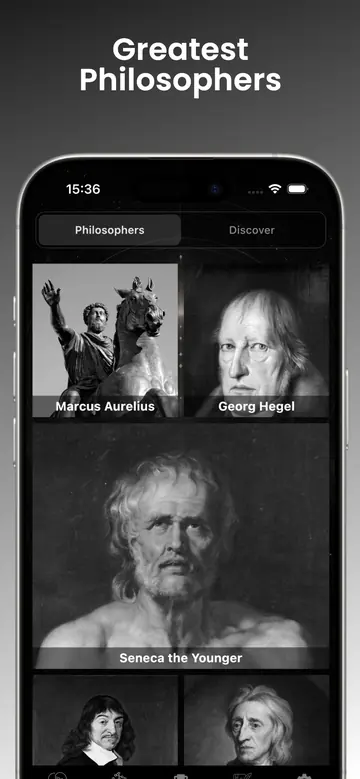
Create a sourced Marcus Aurelius collection in Philosophia
Open Marcus Aurelius's profile, filter his quotes, check the source work, and create collections by discipline—Judgment, Duty, Community, and Impermanence—rather than one unsorted favorites list.
Set Marcus Aurelius as a preferred thinker when you want a focused period of reading. Keep the quote visible with a widget, then open the app when a passage deserves its source and context. Use the Stoicism school page to compare his private exercises with Epictetus's teaching and Seneca's letters.
Save selectively. Add a passage only after naming how you intend to test it. The collection then becomes a practical index into Meditations, not a gallery of borrowed authority. When a paraphrase cannot be sourced, write it in your own notes as a summary instead of attributing quotation marks to Marcus.